
VALUE-BASED CARE STRATEGY FOR PHYSICIAN PRACTICES, MEDICAL GROUPS, ACOs & HEALTH SYSTEMS
You Can Improve Quality — and Still Lose Money — Under Value-Based Care.
Strong quality metrics can coexist with serious financial exposure. Attribution, contract design, financial assumptions, operating capability, and governance all shape whether value-based performance is sustainable.
Dr. Richard W. Walker, Jr. helps organizations identify where they are exposed, assess their readiness, and build the capabilities required to perform successfully under value-based arrangements.
Speaking & Executive Briefings • Executive Education • Strategy & Advisory
VALUE-BASED CARE CHANGES MORE THAN REIMBURSEMENT
A Contract Creates Accountability.
You Still Have to Build the Capability to Perform
Value-based care changes what organizations are accountable for across patient outcomes, utilization, quality, cost, population performance, and financial results.
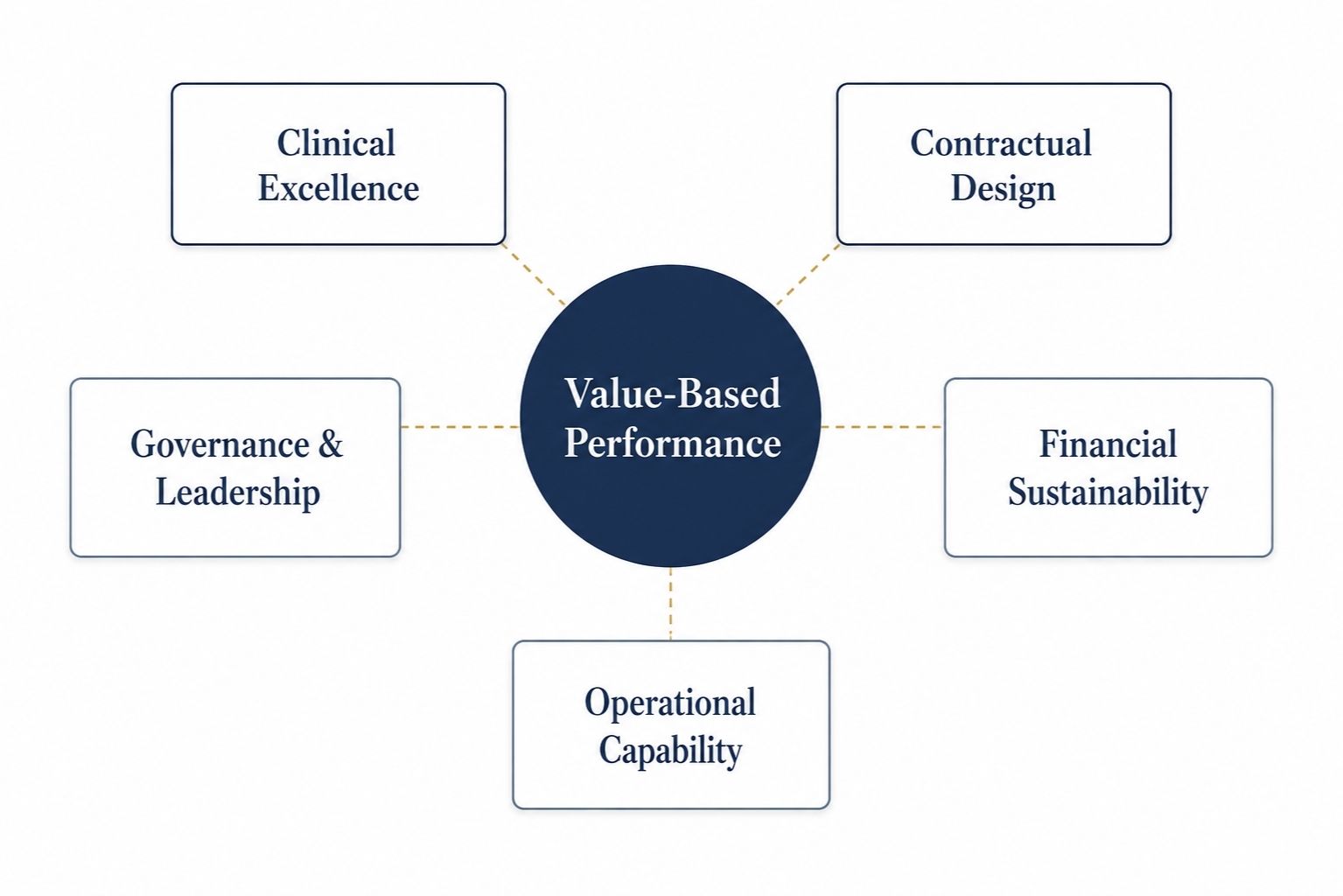
Attribution affects whose performance counts. Contract terms influence how risk and reward are distributed. Clinical operations determine whether patient risk is identified early enough to change outcomes. Financial assumptions affect whether the required infrastructure can be supported. Governance determines who sees problems, who owns them, and how quickly the organization responds.
Value-based performance depends on these functions working together.
Where Do You Need to Be Better Prepared?
-Speaking, Education and Advisory
Here's Your Starting Point

Speaking & Executive Briefings
For conferences, associations, boards, physician organizations and executive audiences that need a practical and substantive examination of value-based care.

Executive Education & Working Sessions
Structured programs to take your leadership team beyond general awareness and work through readiness, contract viability, financial risk, prevention-first operations, payment economics or transformation.

Strategy & Advisory
Tailored engagements to facilitate deeper support translating value-based strategy into operating decisions, organizational readiness, governance and implementation priorities.
A SYSTEM FOR VALUE-BASED PERFORMANCE
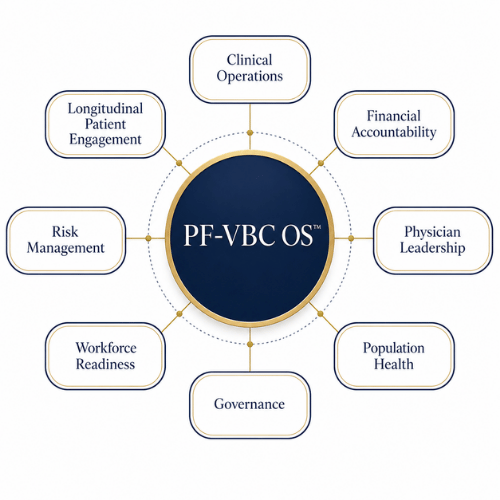
PF-VBC OS™: Connecting the Capabilities Behind Value-Based Performance
The Prevention-First Clinical Operating System, PF-VBC OS™, helps you see how the major capabilities inside your organization must work together to support sustainable value-based performance.
Rather than treating clinical care, finance, physician leadership, population health, governance, workforce readiness and risk management as separate initiatives, the framework helps you examine how they connect, and where gaps may be limiting your ability to perform.
Dr. Walker uses PF-VBC OS™ to help organizations identify where they may be exposed, clarify what capabilities need to be strengthened, and translate value-based strategy into practical operating priorities.
ABOUT DR. RICHARD W. WALKER, JR., MD, MBA

A Physician Executive Who Understands Value-Based Care From More Than One Side of the System
Dr. Walker’s perspective has been shaped by clinical medicine, executive leadership, healthcare consulting, population health, prevention and healthcare-enterprise development.
Born and raised in Spanish Harlem, he entered healthcare through service in the United States Air Force as a combat medic and laboratory technician. He later practiced Obstetrics and Gynecology for approximately 20 years and spent another 15 years working in Functional and Environmental Medicine.
That breadth of experience matters when your organization is trying to make value-based care work. Clinical decisions, financial accountability, operating capability, physician leadership and patient outcomes do not exist in separate worlds. Dr. Walker brings those perspectives together to help you examine the realities behind the strategy.
Today, he works as a physician executive, value-based care strategist, author and executive educator, helping organizations understand where they may be exposed, what capabilities they need to strengthen, and what it will take to perform more effectively under value-based arrangements.
START WITH THE DECISION IN FRONT OF YOU
Value-Based Care Creates Questions That Deserve Answers Before the Numbers Provide Them.
You may be evaluating a new value-based agreement.
You may already be carrying responsibility and trying to understand why clinical progress has not produced the financial result you expected.
Your board may need greater clarity about risk. Your physicians may need a practical understanding of what value-based care changes. Your operating team may need capabilities the contract assumes are already in place.
Start with the issue your organization needs to solve.